You can use a VA loan to buy land in Texas, but only if the land already comes with a home or you have approved plans to build one. Land-only purchases are not allowed.
Read on to learn how VA construction loans work for veterans planning to buy land and build a home.
What You Should Know When Using a VA Loan to Buy Land in Texas
VA loans are designed to make homeownership easier for veterans, active-duty service members, and surviving spouses.
You cannot use a VA loan to hold raw land without clear construction plans.
- Buying land with an existing home: If you’re buying a move-in-ready home that meets VA appraisal and property standards, the purchase price already includes the land.
- Buying land and building a new home: A VA construction-to-permanent loan merges the cost of the land purchase and home construction into one mortgage.
Remember: You must occupy the home as your primary residence, which means you cannot use a VA loan to buy or build a rental property or vacation home.
How VA Construction Loans Work
Backed by the U.S. Department of Veterans Affairs, VA construction loans offer the same benefits as traditional VA home loans, including:
For veterans, VA construction loans offer a way to build a home with lower upfront costs and fewer financial hurdles than standard construction loans.
VA One-Time Close Construction Loan
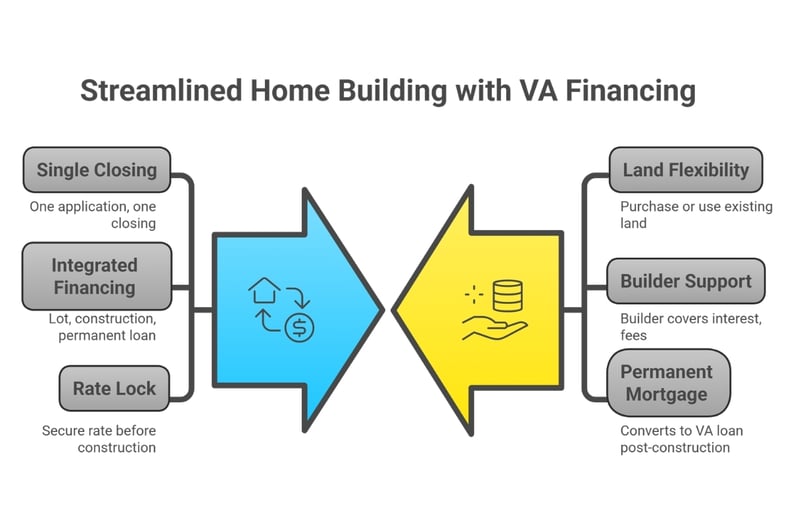
This option combines the lot purchase, construction costs, and permanent VA mortgage into one loan.
Pros
- Single closing: A VA one-time close construction loan closes once before construction starts, which means you avoid the additional costs and paperwork of a second closing. Some lenders may let you secure the permanent mortgage rate before you build the home.
- Works with new or existing land: The loan covers the lot purchase if you’re buying land as part of the construction loan. It provides construction financing if you already own the land and plan to build a home as your primary residence.
- Short-term construction financing to permanent financing: A VA one-time close construction loan converts into a permanent VA mortgage when the construction is finished. The loan is normally considered guaranteed upon closing. However, VA will issue the guaranty only after receiving a clear final compliance inspection report.
- Builder-paid construction costs: The builder covers interest payments and certain costs during construction, such as inspection fees and title updates. They may factor these costs into the construction contract, lowering your upfront expenses.
Cons
- Limited lender availability: Not every VA lender offers one-time close construction loans.
- Stricter requirements: Since a VA construction loan has a different structure compared to a traditional mortgage, it involves more documentation and more stringent qualifications.
VA Construction Loan Process
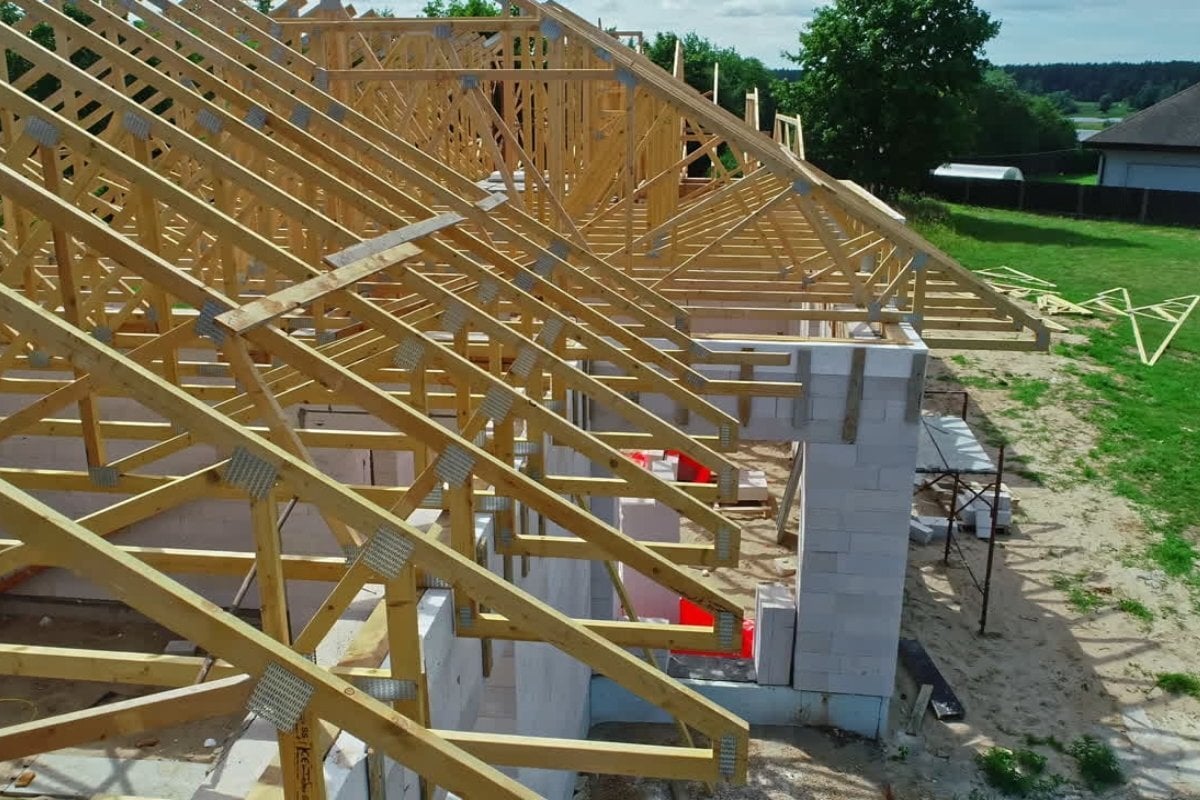
Here are the typical steps to use a VA loan for buying land and building a home in Texas:
Step 1: Find a participating VA-approved lender.
Since few VA lenders offer VA construction loans, be sure to choose one with experience in VA construction financing.
Compare multiple lenders as interest rates, credit score requirements, and construction loan guidelines can vary.
Step 2: Confirm your eligibility.
Request your Certificate of Eligibility from VA or ask your lender to help you obtain it.
Your lender will also check your VA entitlement to know how much of your VA benefit you can use for the construction loan.
Step 3: Get pre-approved.
Submit documentation showing your income, assets, cash reserves, and debts. The lender will also check your credit history.
Pre-approval helps you set a clear budget before buying land or starting construction plans.
Step 4: Find a lot for your homebuilding plans.
It must support the construction of your primary residence, not just raw land to hold for future use.
Step 5: Work with a reputable builder.
While VA no longer requires a VA Builder ID, your lender will still review the builder and require architectural plans, a signed building contract, permits, and cost estimates.
It’s best to find a builder familiar with VA construction loan requirements for a streamlined process.
Step 6: Submit the necessary construction documents.
Before closing, you must provide approved build plans, a clear construction timeline, and documents proving that the project follows local building rules.
After a VA appraisal, the lender confirms the planned home’s value and whether the construction project meets VA loan requirements.
Step 7: Close on the loan and start construction.
Construction starts after closing. Then, your lender will release funds to the builder in multiple stages (called “draws”) during the construction process.
Step 8: Move into your new home.
Finally, once your new home is built, you can move in and start loan repayment under the permanent loan terms after the property passes the final inspection and meets VA property standards.
Remember: Work with an experienced lender that knows the VA construction loan process to avoid unwanted delays. Also, find a dependable builder who communicates properly and takes charge. Ask questions, check previous construction projects, and review feedback to see if homeowners were satisfied with the results.
Two-Time Close Loan
This option may work for veterans who already started with a standalone short-term construction loan.
A two-time close loan involves one closing for the initial construction financing and another closing for the permanent VA loan after construction.
It may not be the best choice since it involves two closings, additional costs, and more approval steps.
Refinancing Into a VA Loan
Because new construction carries more risk and requires more documentation, it’s often hard to find VA lenders that offer true one-time close construction loans.
A common alternative is to use a conventional short-term construction loan first and then refinance into a permanent VA loan after the home is complete and meets VA requirements.
However, this route may require a down payment or existing land equity during construction, unlike a VA construction loan that allows you to build with no required down payment.
Should You Buy Land and Build Your Own Home?
A home construction project is a good fit for you if:
- You can’t find your dream home so you want to build a custom home that fits your needs.
- You’re willing to invest lots of time and effort into creating the home you want.
- Your target area has low housing inventory, which means there’s more buyer demand than available property supply. In such markets, there’s high competition among buyers and homes may sell above the asking price.
Work With a Knowledgeable and Trustworthy VA Lender
Choosing an experienced lender can make the difference between a smooth loan process and frustrating delays.
Our loan officers at Texas United Mortgage know that VA construction loans can be much more complex than traditional mortgages.
We will help you understand the requirements, estimate how much you can afford, and explore financing alternatives if necessary.
Talk with our mortgage experts to review your VA loan options today.
Next, find out how long it takes to get a VA loan approval in Texas with our extensive guide.








Comments