Section 50(a)(6) of the Texas Constitution regulates home equity cash-out loans and sets unique requirements that don’t apply in other states.
In this article, I’ll explain exactly how the Texas 50(a)(6) rule works and cover the most essential state-specific guidelines you should know before accessing your home equity, including the loan-to-value limit, timing requirements, waiting periods, and fees.
Texas 50(a)(6) Loan Types
Any loan that lets a homeowner take cash out of a primary home beyond paying off existing liens is considered a Section 50(a)(6) loan, which follows restrictive guidelines and involves additional requirements compared to a standard refinance.
Section 50(a)(6) loans, also called Texas A6 loans or Texas 50(a)(6) loans, include:
- Cash-Out Refinancing: This involves obtaining a bigger loan than your existing one, which is fully paid off and replaced by the new loan. You’ll have one monthly payment and receive cash from the difference between your new and old loans. Cash-out refinancing reduces your home equity.
- Home Equity Loan: This works as a second mortgage, which means it won’t replace your current loan. You’ll have two separate monthly payments.
- Home Equity Lines of Credit (HELOC): With a HELOC, you may borrow as much money as you need up to your approved credit line during a “draw period,” usually 10 years. You may also repay and reborrow money. It’s not a fixed single lump sum payment like in cash-out refinancing or home equity loans. However, HELOCs typically have variable interest rates.
Many homeowners tap home equity to fund major expenses, like home improvements, business operations, education costs, or debt consolidation.
Key Texas 50(a)(6) Rules and Guidelines
Under Article XVI of the Texas Constitution, Section 50 defines when and how homeowners may use equity from their primary residence.
Here are the key rules and requirements:
Proper Written Consent
Homeowners must secure a Texas A6 loan by a voluntary lien on the homestead through a written agreement. All owners and their spouses must give consent, and the agreement must be completed in full without missing terms.
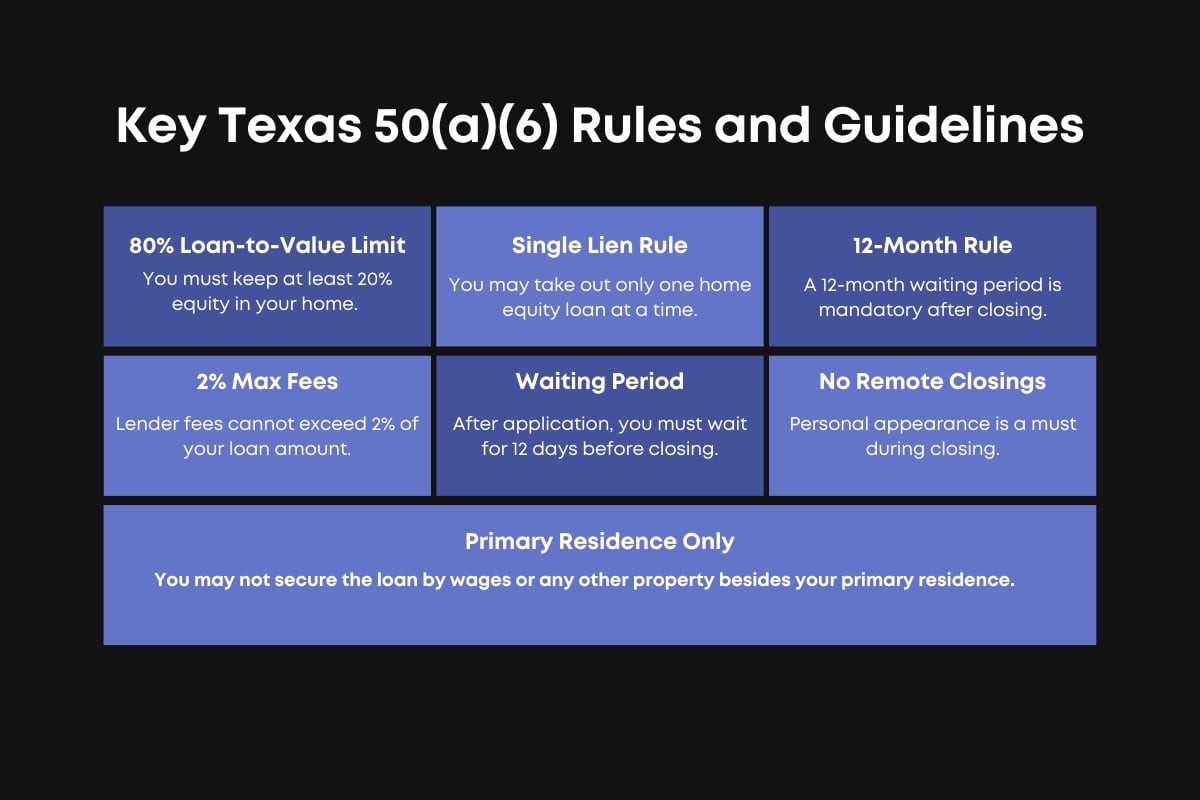
80% Loan-to-Value Limit
You must maintain at least a 20% equity stake in your home. The loan’s principal amount must not exceed 80% of your homestead’s fair market value when combined with all other debts secured against the house.
One Home Equity Loan at a Time
Texas allows only one active home equity loan on a primary residence at any given time. You cannot have other liens, such as a secondary cash-out loan or HELOC, until you’ve fully repaid your current loan.
12-Month Rule
A 12-month waiting period is mandatory after closing on a Section 50a6 loan before obtaining a new cash-out loan on the same property.
2% Max Fees
Lender fees cannot exceed 2% of your loan’s principal amount. However, the limit excludes discount points as well as third-party closing costs, such as appraisals, surveys, and title insurance.
This rule helps protect homeowners from excessive upfront fees to make home equity loans more accessible.
Waiting Period
After the application, you must wait 12 days before closing. The lender should send a 12-day loan disclosure notice that you and your spouse must sign and date to start the waiting period.
This rule is in place to make sure borrowers have enough time to thoroughly understand loan terms.
Lien on Homestead Only
You may not secure the loan by wages or any other property besides your primary residence. Also, you may not take out a Texas A6 loan on a secondary residence or investment property.
Purchase Loans Not Allowed
In Texas, you cannot use a Section 50(a)(6) loan to purchase a home. However, you’re free to use the cash you receive for a down payment or other homebuying costs, provided the property is financed with a separate purchase loan.
No Remote Closings
In most cases, listed borrowers and their spouses must appear in person at a Texas title company or the lender’s office to sign closing documents. Texas A6 loans generally don’t allow remote signings or the use of power of attorney.
Why Texas Law Limits Home Equity Borrowing
Texas enforces some of the most restrictive home equity rules in the United States. The state provides strong homestead protection, with laws that prioritize homeowner protections.
Section 50(a)(6) sets strict conditions on equity loans to:
- Lower foreclosure risk and prevent overborrowing from repeated refinancing, which erodes home equity over time. Texas laws protect homeowners from forced sale due to excessive debt (with some exceptions, like purchase money loans and taxes).
- Prevent predatory lending practices, so lenders won’t take advantage of homeowners who need immediate cash.
Key Takeaway: By placing loan limits, the laws help prevent homeowners from acquiring more debt than they can afford and improve long-term homeownership success.
When These Requirements Don’t Apply
Section 50(a)(6) rules and guidelines don’t apply to:
- Rate-and-term refinances without cash-out
- Purchase loans
- Loans for investment or second homes
Work With a Trusted Lender for a Smooth Application Process
With all the intricacies involved in a Texas 50(a)(6) loan, it’s crucial to find a reputable lender who knows the ins and outs of Texas home equity loans.
Our expert loan officers at Texas United Mortgage will guide you through the full process, from application to closing. We’ll answer your questions, explain the rules clearly, and ensure proper compliance.
Get in touch with us today to learn more about your options!









Comments